Japanese surnames are deeply rooted in geography and the natural world. Most people in Japan didn’t actually have last names until the late 1800s. When the law changed, many chose names based on where they lived or the landmarks surrounding their homes. This is why you see so many references to mountains, rice fields, and trees in these names.
Understanding common japanese last names helps you see the history of the families that carry them. Whether you are writing a story or just curious about the culture, these names offer a look into the landscape of Japan.
Most Common Japanese Last Names and Their Meanings
These are the names you will see most often across the country. They represent some of the largest family lineages in Japan.
- Sato (Wisteria and assistance)
- Suzuki (Bell wood or bell tree)
- Takahashi (High bridge)
- Tanaka (Middle of the rice field)
- Watanabe (To cross the edge or ferryside)
- Ito (This wisteria)
- Yamamoto (Base of the mountain)
- Nakamura (Middle village)
- Kobayashi (Small forest)
- Kato (Increasing wisteria)
Surnames inspired by nature and trees
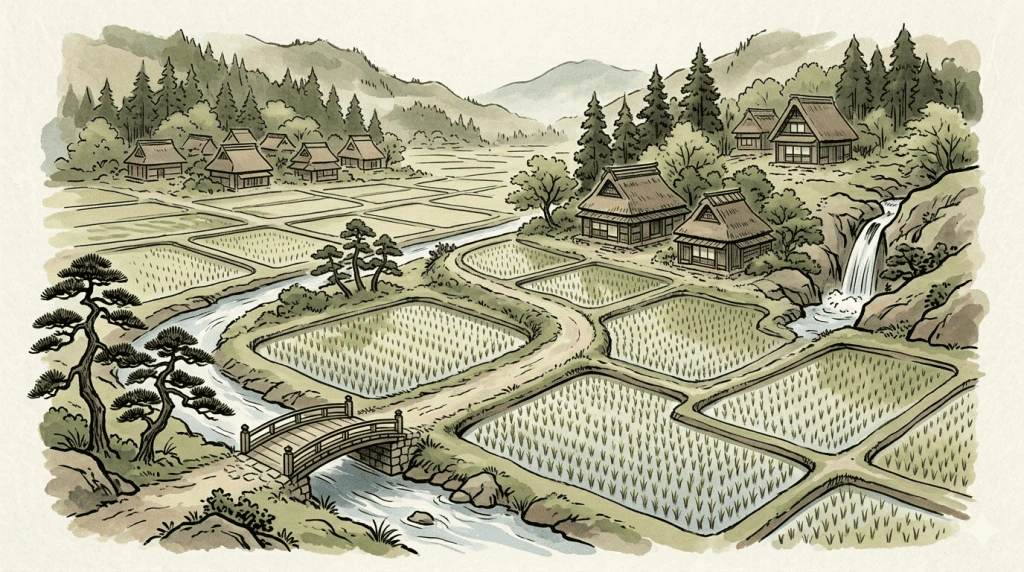
Nature is a massive part of the Japanese naming tradition. Many common japanese last names describe a specific type of tree or a beautiful natural feature.
- Matsumoto (Base of the pine tree)
- Inoue (Above the well)
- Kimura (Tree village)
- Hayashi (Forest)
- Shimizu (Pure water)
- Mori (Forest)
- Abe (Peaceful times)
- Ikeda (Rice field near a pond)
- Hashimoto (Base of the bridge)
- Yamashita (Under the mountain)
- Ishikawa (Stone river)
- Maeda (Front rice field)
- Ogawa (Small river)
- Okada (Rice field on a hill)
- Hasegawa (Long valley river)
Geographic and location based names
Many families took their names from the specific layout of their village or the direction their house faced. These common japanese last names are very descriptive.
- Murakami (Above the village)
- Kondo (Near the wisteria)
- Ishii (Stone well)
- Saito (Purified wisteria)
- Sakamoto (Base of the slope)
- Fujita (Wisteria rice field)
- Nishimura (West village)
- Nakata (Middle rice field)
- Yamada (Mountain rice field)
- Miura (Three bays)
- Ono (Small field)
- Takeuchi (Inside the bamboo)
- Chiba (Thousand leaves)
- Taniguchi (Mouth of the valley)
- Kudo (Craft wisteria)
More famous and widespread surnames
These names round out our list of the most frequent family names you will encounter. Each one carries a unique legacy within Japanese history.
- Ueda (Upper rice field)
- Takagi (Tall tree)
- Shibata (Brushwood rice field)
- Yokoyama (Side of the mountain)
- Miyazaki (Shrine cape)
- Tamura (Rice field village)
- Koyama (Small mountain)
- Sano (Small field)
- Masuda (Increasing rice field)
- Kaneko (Golden child)
- Matsui (Pine tree well)
- Noguchi (Entrance to the field)
- Kikuchi (Chrysanthemum pond)
- Sakai (Boundary)
- Uchida (Inside the rice field)
- Iwasaki (Stone cape)
- Matsuo (Pine tree tail)
- Nomura (Field village)
- Ando (Peaceful wisteria)
- Sugimoto (Base of the cedar)
- Arai (New well)
- Kono (Wild field)
- Komatsu (Small pine tree)
- Ishida (Stone rice field)
- Hino (Sun field)
- Kojima (Small island)
- Imai (New well)
- Fukuda (Lucky rice field)
- Sakamoto (Base of the slope)
- Takeda (Bamboo rice field)
- Ueno (Upper field)
- Sugawara (Sedge field)
- Fujimoto (Base of the wisteria)
- Iwanami (Stone wave)
- Serrano (Field on a mountain)
- Kuroda (Black rice field)
- Hoshino (Star field)
- Kawaguchi (Mouth of the river)
- Tsuda (Port rice field)
- Nagata (Long rice field)
- Okumura (Inner village)
- Yano (Arrow field)
- Seki (Barrier)
- Miyake (Shrine house)
- Hirano (Flat field)
- Suda (Nest rice field)
- Ota (Large rice field)
- Matsumura (Pine tree village)
- Hanaoka (Flower hill)
- Tani (Valley)
- Kawasaki (River cape)
- Hata (Farm or field)
- Yoshida (Lucky rice field)
- Okazaki (Hill cape)
- Horita (Moat rice field)
- Uchiyama (Inside the mountain)
- Tsunoda (Corner rice field)
- Nakagawa (Middle river)
- Koizumi (Small spring)
Choosing the right name
Whether you are building a character for a story or researching your own heritage, these common japanese last names provide a great starting point. Each name tells a story of a specific place in Japan, from the mountains to the coastal villages. By looking at the meanings behind these family names, you can get a better sense of the deep connection between the Japanese people and the natural world around them.
Final Thoughts on Common Japanese Last Names
Common Japanese last names are more than just family identifiers—they reflect Japan’s deep connection with nature, history, and geography. From mountains and rivers to fields and forests, each surname carries a meaningful story passed down through generations. Exploring these common Japanese last names gives a better understanding of Japanese culture and helps you appreciate how closely people are connected to their environment.