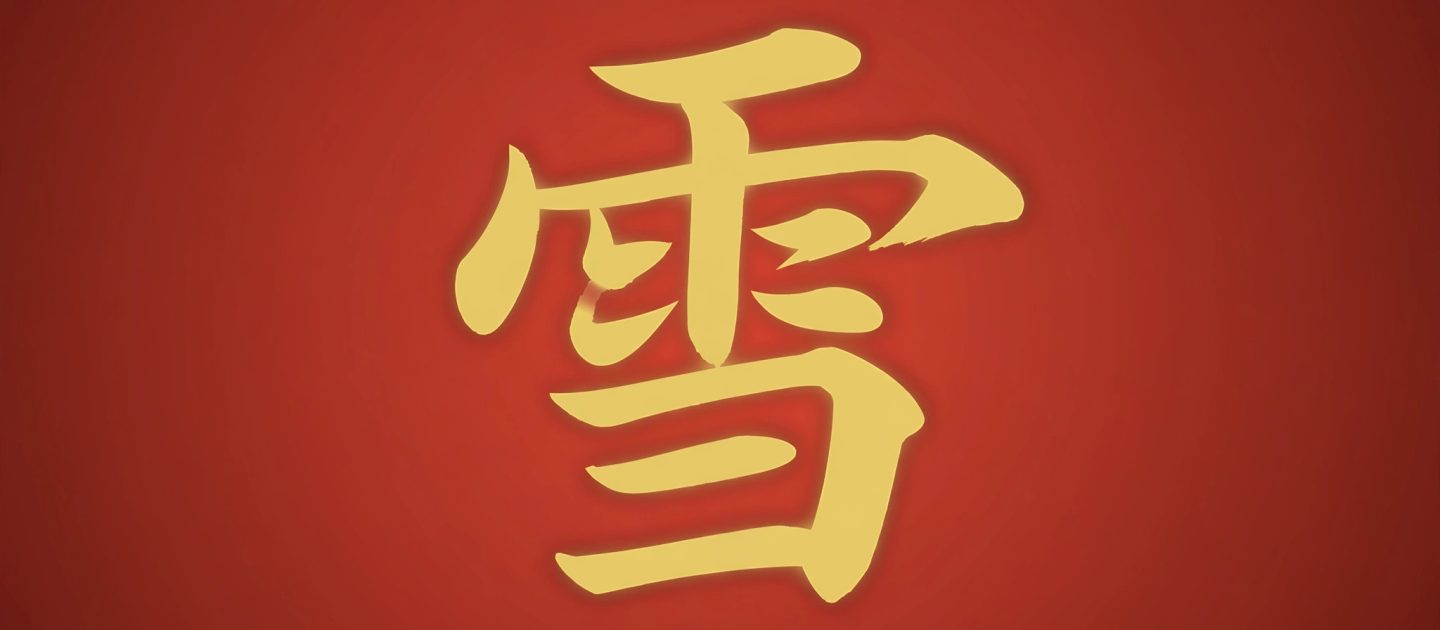
Snow is one of the most loved images in Japanese naming. Northern and western Japan — the famous yukiguni, “snow country” — gets some of the heaviest snowfall on earth, and snow there stands for purity, quiet, and endurance through winter. The core character is 雪 (yuki, snow), and it sits behind some of Japan’s most recognisable names — as well as a supporting cast of winter characters: winter itself, whiteness, ice-like crystal, and the still calm that comes after snowfall. If you are choosing a name for a character, a pen name, or a gaming handle, a snow name gives it instant serenity — but it helps to know which ones are everyday classics and which are modern or poetic picks.
If you want to explore authentic combinations for your own project, our Japanese Name Generator can help. And if you want to see your own name transformed into Japanese script, try our katakana converter to see your name in Japanese.
The Core Kanji for “Snow”: Yuki (雪)
Almost every name in this guide is built on 雪 (yuki). It is read “yuki” on its own and combines freely: 雪子 (Yukiko), 雪菜 (Yukina), 雪雄 (Yukio). Around it sit four related characters that carry the wider winter picture: 冬 (fuyu, winter), 白 (shiro / haku, white), 晶 (akira, crystal — the sparkle of ice crystals), and 凪 (nagi, a calm or lull — the stillness after snow).
Two honest caveats up front. First, kanji readings are flexible — the same 雪 combination can sometimes be read more than one way, so always confirm the reading you intend. Second, the sound “Yuki” does not always mean snow: 由紀 (Yuki, “reason + record”) and 幸 (Yuki, “happiness”) are common Yuki spellings with no snow in them at all. If the snow meaning is the point, check that the kanji is actually 雪 before claiming it.
Snow names fall into two families. The first is the classic set — Yuki, Yukiko, Miyuki, Yukio — used for generations and instantly recognised. The second is the modern set — Yukina, Rikka, Nagi — popular in recent decades, fresh-sounding, and more common for characters and younger children. The guide below is honest about which is which.
Snow Girl Names
- Yukiko (雪子) — “snow child”. Classic; one of Japan’s most famous snow names.
- Yukina (雪菜) — “snow + greens”. Modern, very common for girls.
- Yukino (雪乃) — “snow + from”. Common, modern.
- Yukine (雪音) — “snow + sound”. Modern; suggests the hush of falling snow.
- Yukiho (雪穂) — “snow + ear of grain”. Rarer, gentle.
- Yukika (雪華) — “snow flower”. 雪華 is a classical word for snowflakes. Rarer.
- Yukie (雪絵) — “snow + picture”. Classic; more common in older generations.
- Yukimi (雪美) — “snow + beauty”. Established, classic-modern.
- Miyuki (美雪) — “beautiful snow”. One of the most classic snow names of all; also spelled 深雪 (“deep snow”), same reading.
- Koyuki (小雪) — “light snow”. Common; 小雪 is also the name of the “minor snow” season in the old calendar.
- Hatsuyuki (初雪) — “first snow of the season”. Poetic and rare as a given name.
- Fuyuko (冬子) — “winter child”. Classic.
- Fuyuka (冬香) — “winter + fragrance”. Modern, real.
- Fuyumi (冬美) — “winter + beauty”. Established.
- Rikka (六花) — “six flowers” — the old word for a snowflake, because snow crystals have six sides. Modern and distinctive.
雪 in boys’ names reads quiet and refined rather than strong, which is exactly why the names below stand out — they are a smaller, more traditional set than the girls’.
Snow Boy Names
- Yukio (雪雄) — “snow + heroic”. Classic; the best-known boys’ snow name.
- Yukio (雪夫) — “snow + man”. Classic variant spelling of Yukio; confirm which spelling you mean.
- Yukito (雪兎) — “snow rabbit”. Modern; the rabbit is a classic winter moon image in Japan.
- Yukito (雪斗) — “snow + Big Dipper”. Modern variant spelling of Yukito.
- Yukiya (雪也) — “snow + to be”. Modern, rarer.
- Fuyuki (冬樹) — “winter tree”. Established; occasionally used for girls too.
Unisex Snow Names
- Yuki (雪) — “snow”. The iconic snow name — used for girls more often, but genuinely unisex and the simplest snow name there is.
- Akira (晶) — “crystal, sparkle”. Snow-adjacent rather than snow itself: the crystal is the sparkle of ice. A classic unisex name.
- Nagi (凪) — “a calm, a lull”. The still air after snowfall. A modern unisex favourite.
One name people often ask about: Shirayuki (白雪, “white snow”) is a real word, but as a name it reads fairy-tale — it is permanently tied to 白雪姫 (Shirayuki-hime, Snow White). Treat it as a character name, not an everyday given name. And as noted above, a “Yuki” written 由紀 or 幸 is a lovely name too — it just doesn’t mean snow.
As a rule of thumb, the safest real-life picks are Yuki, Yukiko, Miyuki, Koyuki, Yukina, and Yukio, while Rikka, Hatsuyuki, Yukika, and Yukito are the more distinctive choices — perfect for characters, pen names, and gaming handles.
Frequently Asked Questions
What is the Japanese word for snow in names?
雪 (yuki). It is the character behind nearly every name in this guide.
Which are the most popular snow names?
Yuki, Yukiko, Miyuki, Yukina, and Koyuki are the most popular snow names.
Are snow names unisex?
Yuki is the clearest unisex snow name, and Akira and Nagi work across genders too. Most 雪 names (Yukiko, Yukina, Miyuki) are used for girls, and Yukio and Yukito are used for boys.
Does every name that sounds like “Yuki” mean snow?
No. 由紀 (Yuki) and 幸 (Yuki) are common spellings that mean “reason + record” and “happiness”. Only the 雪 spelling means snow — always check the kanji.
What is the difference between 雪 (yuki) and 冬 (fuyu) in names?
雪 is the snow itself; 冬 is the winter season. Fuyuko and Fuyuki are winter names rather than snow names in the strict sense — they carry the same cold, quiet feeling.
Which are safe, classic picks?
Yuki, Yukiko, Miyuki, Koyuki, and Yukio are all established, widely used names.
Which are bold, character-style picks?
Rikka, Hatsuyuki, Yukika, and Yukito. These sound distinctive and modern (or, for Hatsuyuki, deliberately poetic) — great for anime-style characters, gaming handles, and pen names.
Expanding Your Character’s Naming Universe
Looking for a warmer element? Our guide to Japanese names meaning love is built around 愛, the love kanji. For something fiercer, see our Japanese names meaning fire, and for a gentler element, our Japanese names meaning water. And whenever you are ready to build the perfect combination for your character, hop back to the Japanese Name Generator — or see your own name in katakana first.