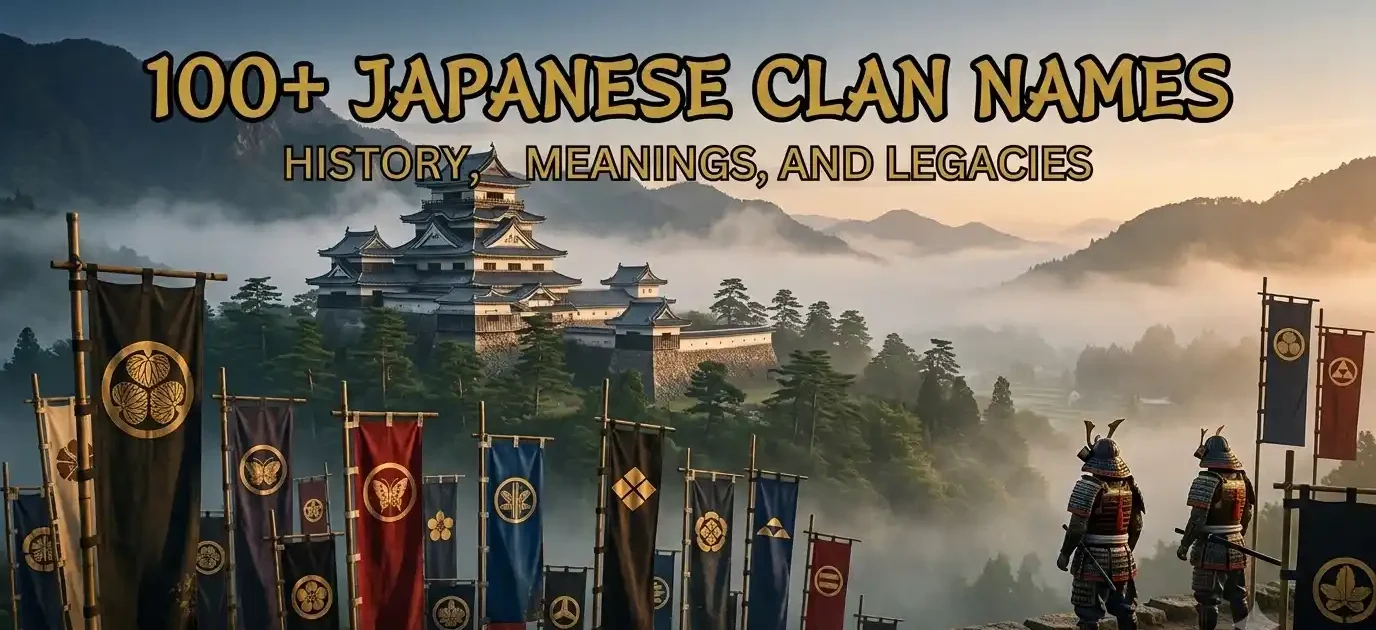
In feudal Japan, Japanese clan names were a restricted symbol of ultimate power, royal lineage, and military might. Commoners did not have the legal right to use surnames until the late 1800s. Whether you are building a story, designing a video game character, or researching your next gaming guild name, choosing a powerful clan name adds instant cultural authority. If you want to mix and match historical elements seamlessly, using a dedicated japanese name generator can help you find the perfect authentic combination for your characters.
The Big Four: Ancient Imperial House Names (Kuge)
Before the samurai took control, the imperial court was dominated by four massive aristocratic families known collectively as Gem-pei-to-kitsu. These noble lines set the standard for historical Japanese naming conventions.
1. Fujiwara (藤原)
The most powerful family of imperial regents. They secured control of the court through marriage politics, systematically marrying their daughters into the emperor’s line.
- Meaning: Wisteria field
- Vibe: Elegant, political, court advisor
2. Minamoto (源)
Also known as the Genji, this name was granted by emperors to children excluded from royal succession. They went on to win the brutal Genpei War and established Japan’s first military shogunate.
- Meaning: Origin or source
- Vibe: Warrior royalty, legendary samurai heritage
3. Taira (平)
Also known as the Heike, the Taira clan was the fierce rival of the Minamoto. They were famous for their massive naval strength and rapid ascent to power.
- Meaning: Flat, level, or peaceful
- Vibe: Poetic, tragic bravery, fierce warrior spirit
4. Tachibana (橘)
The rarest of the big four noble families, serving as high court officials and major advisors to early emperors.
- Meaning: Wild mandarin orange
- Vibe: Classical, rare, spiritual nobility
Legendary Samurai & Warlord Clan Names (Buke)
During the chaotic Warring States Era, powerful regional warlords formed their own military clans to battle for control over Japan. These names carry an authoritative, tactical, and aggressive aesthetic.
| Clan Name | Kanji | Historical Legacy | Ideal For |
| Tokugawa | 徳川 | The ultimate victors who unified Japan and ruled for 250 years. | Shoguns, commanders, absolute rulers |
| Takeda | 武田 | Famous for their unstoppable cavalry charges and tactical brilliance. | Aggressive fighters, martial masters |
| Oda | 織田 | Led by a ruthless visionary who revolutionized warfare with firearms. | Innovators, rebels, fierce leaders |
| Date | 伊達 | Famous for the One-Eyed Dragon leader who wore distinct black armor. | Edgy characters, tactical geniuses |
| Uesugi | 上杉 | Honored as deeply spiritual warriors who fought with absolute discipline. | Monks, protectors, honorable knights |
| Shimazu | 島津 | Masters of early firearms and ambush tactics based in southern Japan. | Marksmen, tactical ambush units |
| Hojo | 北条 | Powerful regents who controlled the early shogunates behind the scenes. | Manipulators, strategists, hidden rulers |
| Mori | 毛利 | Naval masters who controlled western Japan via water trade routes. | Sailors, pirates, resource masters |
100 Strong Japanese Clan Names Categorized
To help you find the exact name configuration for your project, here is a structured collection of 100 powerful clan and noble names divided by their cultural energy.
Martial & Forceful Names (Perfect for Warriors and Gamers)
- Asakura (朝倉) — Morning granary
- Ashikaga (足利) — Dominant foot or feet
- Akamatsu (赤松) — Red pine
- Chosokabe (長宗我部) — Long ritual section
- Hatakeyama (畠山) — Orchard mountain
- Hosokawa (細川) — Narrow river
- Imagawa (今川) — Modern river
- Ii (井伊) — Well or source
- Kuroda (黒田) — Black rice field
- Maeda (前田) — Front rice field
- Miyoshi (三好) — Three virtues
- Otomo (大友) — Great friend or protector
- Ouchi (大内) — Great interior or palace
- Rokkaku (六角) — Hexagon
- Saito (斎藤) — Purified wisteria
- Sanada (真田) — True rice field
- Satake (佐竹) — Assistant bamboo
- Shiba (斯波) — Tall grass
- Tsugaru (津軽) — Light port
- Tsutsui (筒井) — Cylindrical well
- Ukita (宇喜多) — Floating field of joy
- Yamana (山名) — Mountain name
- Amago (尼子) — Children of the nun
- Asano (浅野) — Shallow field
- Date (伊達) — Gallant or elegant
Mythological & Natural Elements (Perfect for Magic and Fantasy)
- Amaterasu (天照) — Shining heaven
- Aoyama (青山) — Blue mountain
- Arashi (嵐) — Storm
- Fujishima (藤島) — Wisteria island
- Hayabusa (隼) — Peregrine falcon
- Hoshino (星野) — Star field
- Inari (稲荷) — Rice load (Fox deity)
- Izumi (泉) — Natural spring
- Kamado (竈) — Stove or hearth
- Kaminari (雷) — Thunder
- Kaze (風) — Wind
- Matsumoto (松本) — Base of the pine tree
- Mizushima (水島) — Water island
- Mori (森) — Forest
- Nagahama (長浜) — Long beach
- Ogawa (小川) — Small river
- Ryu (竜) — Dragon
- Sakuraba (桜庭) — Cherry blossom garden
- Shimizu (清水) — Pure water
- Shirai (白井) — White well
- Tachibana (橘) — Wild mandarin orange
- Tsukishima (月島) — Moon island
- Umehara (梅原) — Plum blossom field
- Yamamoto (山本) — Base of the mountain
- Yanagi (柳) — Willow tree
Noble, Rare & Aristocratic Names
- Akechi (明智) — Bright wisdom
- Annen (安年) — Peaceful years
- Chiba (千葉) — Thousand leaves
- Fujiwara (藤原) — Wisteria field
- Gojo (五条) — Fifth avenue
- Honda (本田) — Root rice field
- Ichijo (一条) — First avenue
- Imamura (今村) — Modern village
- Ishida (石田) — Stone rice field
- Katsura (桂) — Katsura tree
- Kino (木野) — Wooden field
- Konoe (近衛) — Royal palace guard
- Kujo (九条) — Ninth avenue
- Minamoto (源) — Origin or source
- Murakami (村上) — Above the village
- Nagano (長野) — Long field
- Nijo (二条) — Second avenue
- Ogasawara (小笠原) — Small hat field
- Sanjō (三条) — Third avenue
- Shimazu (島津) — Island port
- Taira (平) — Flat or peaceful
- Takahashi (高橋) — High bridge
- Uesugi (上杉) — Above the cedar tree
- Kanamori (金森) — Gold forest
- Naoe (直江) — Straight river
Edgy, Shadow & Dark Aesthetics
- Akuma (悪魔) — Demon
- Dokuro (髑髏) — Skull
- Fukage (深影) — Deep shadow
- Genpaku (玄白) — Mysterious white
- Heida (兵田) — Soldier field
- Kageyama (影山) — Shadow mountain
- Kamisori (剃刀) — Razor
- Kurogane (鉄) — Iron or black steel
- Kurorai (黒雷) — Black thunder
- Mikaeri (見返) — Looking back in regret
- Mizuchi (蛟) — Water dragon spirit
- Onizuka (鬼塚) — Demon mound
- Yami (闇) — Darkness
- Yasha (夜叉) — Night demon
- Yuga (幽雅) — Dark elegance
- Zankoku (残酷) — Cruelty
- Chikage (千影) — A thousand shadows
- Kagura (神楽) — God entertainment
- Oborozuki (朧月) — Hazy moon
- Shiranui (不知火) — Unknown fire or ghost light
- Sumizome (墨染) — Dyed in black ink
- Tsukuyomi (月読) — Moon reader
- Uremizu (憂水) — Sorrowful water
- Yororu (夜路) — Night path
- Yugure (夕暮) — Twilight or dusk
How to Form Your Feudal Japanese Persona
When writing a formal historical name, the particle “no” (の) was traditionally placed between the clan name and the given name to show lineage. For example, Minamoto no Yoritomo translates to Yoritomo of the Minamoto clan.
Looking for more inspiration for your creative projects or fictional settings? Alongside historical wartime houses, you can explore our complete guide to Japanese city names to build realistic locations, or browse our curated collection of cute Japanese cat names to find the perfect title for your animal companions.
Frequently Asked Questions
What is a Japanese clan name?
A clan name (uji) is the hereditary name of a samurai house — families like Minamoto, Taira and Fujiwara shaped Japanese history for centuries. Clan names usually pair nature or place words, like Fujiwara (藤原, wisteria field).
What are the most famous Japanese clan names?
The big four of the classical age are Minamoto (源), Taira (平), Fujiwara (藤原) and Tachibana (橘). Later, houses like Tokugawa, Takeda, Uesugi and Date dominated the samurai era.
What does Fujiwara mean?
Fujiwara (藤原) means “wisteria field” — fuji (藤, wisteria) plus hara (原, field or plain). Nature imagery is typical of old clan names.
What is the difference between a clan name and a surname?
Historically the clan name (uji) identified the house and its lineage, while surnames (myoji) came later and were often taken from the clan’s lands. In modern use the two have merged into today’s family names.
How do I create a clan name for my character or guild?
Pick two elements — a nature word (mountain, river, wisteria) and a land word (field, valley, island) — and combine them like the historical names above, or use the generator on the homepage and browse this clan list for a ready-made house name.
[…] Name your squad too. If you run a team, pair your IGN with a matching squad tag — our clan names guide has 100 ideas built for exactly […]